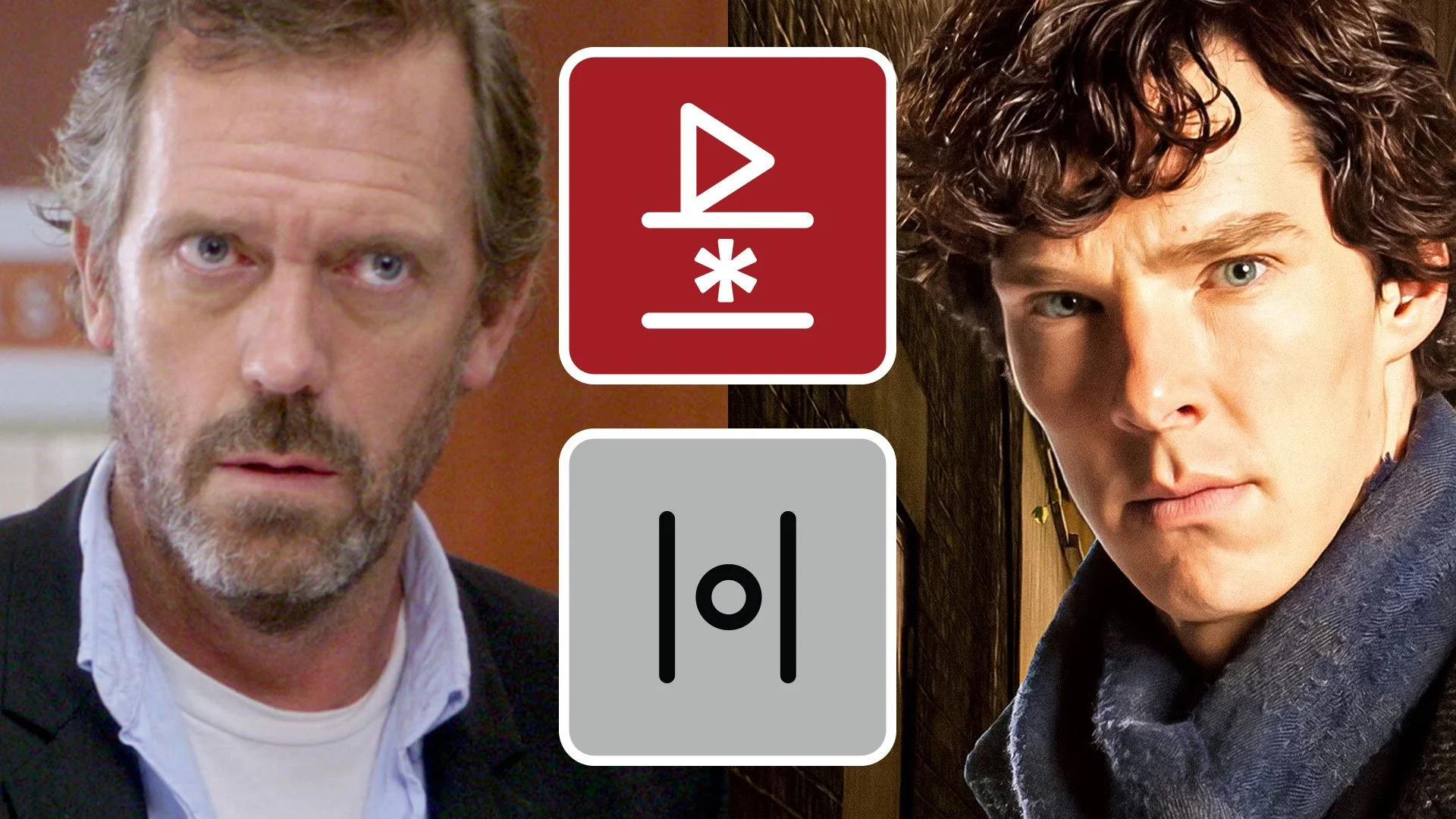
Sherlock Holmes & Dr. House - Prophet/Perceiver
From:
Avatar RoleCraft ID: Prophet / Perceiver
Characters:
Sherlock Holmes, played by Benedict Cumberbatch
Dr. Gregory House, played by Hugh Laurie
The Same Archetype in Different Systems
Strip away setting and style, and the contribution pattern is identical. Both Sherlock Holmes and Dr. Gregory House are compelled to solve mysteries by naming what is actually true when everyone else is operating on assumptions, habit, or convenience.
They don’t seek authority.
They don’t optimize for harmony.
They tolerate ambiguity longer than anyone else in the room.
That internal pressure—to resolve misalignment between facts and story—is the Insightful Prophet role.
The way they do it—through sustained observation, hypothesis-holding, and pattern recognition—is the Perceiver craft.
They wait.
They watch.
They refuse premature certainty.
When they speak, it’s because the truth has crystallized.
Why This Is Prophet (Not Teacher)
Both characters default to explaining, which is why they’re often mislabeled as Teachers. But explanation is incidental, not motivational.
Teachers want others to understand and carry the insight forward.
Sherlock and House want others to stop being wrong.
If people don’t learn, they’re irritated—not concerned. Accuracy matters. Comprehension is optional. That disqualifies Teacher as a primary Role.
Why This Is Perceiver
Neither character moves first. They delay action intentionally while others push for decisions. They’re comfortable being uncertain longer than is socially acceptable.
They act only after the pattern is undeniable.
That’s Perceiver Craft: patience with ambiguity in service of truth.
Where the Two Diverge: System Expectations
Here’s where context matters.
Sherlock Holmes operates outside institutions. He is not responsible for developing others, sustaining teams, or transferring capability. The system asks him for answers—and he delivers. His Prophet / Perceiver pattern is tolerated, even admired.
Dr. Gregory House, however, operates inside a hospital.
A hospital expects senior physicians to be Trainers:
Build judgment in residents
Transfer reasoning under pressure
Develop shared capability
Dr. House is expected to teach.
He does not want to.
He diagnoses brilliantly but trains poorly. Learning happens around him, not because of him. He explains outcomes, not reasoning. He corrects mistakes, not understanding. The same archetype that works cleanly for Sherlock becomes corrosive inside a Trainer-required system.
House isn’t a failed Trainer.
He’s a Prophet / Perceiver placed in a Trainer role.
Why This Pair Works as a RoleCraft Avatar Set
Together, Sherlock and House show the same RoleCraft identity under different constraints:
Outside institutions → the archetype is celebrated
Inside institutions → the archetype becomes disruptive
Same role.
Same craft.
Different consequences.
If either disappears, activity continues—but it’s built on false assumptions.
That’s Prophet / Perceiver impact.
Same Archetype, Same Quote— Different Settings
1. Everyone Else Is Lying to Themselves
Sherlock: “People don’t really want to know the truth. They just want to confirm their beliefs.”
House: “Everybody lies.”
Why they’re the same: Both are naming the same perceptual insight: false narratives are emotionally convenient. Their irritation isn’t with complexity—it’s with self-deception. This is Prophet pressure paired with Perceiver observation.
2. Certainty Is Earned, Not Declared
Sherlock: “When you have eliminated the impossible, whatever remains, however improbable, must be the truth.”
House: “It’s never lupus.” (until it is)
Why they’re the same: Both reject premature closure. Sherlock eliminates; House rules out. Different tone, same method: delay certainty until the pattern forces it.
3. Feelings Are Noise Until the Facts Settle
Sherlock: “Sentiment is a chemical defect found in the losing side.”
House: “If you could reason with religious people, there wouldn’t be religious people.”
Why they’re the same: These lines are often read as arrogance, but they’re actually about signal vs. noise. Emotional attachment distorts perception. Perceivers strip it away—often too aggressively.
4. I’m Not Being Rude — I’m Being Accurate
Sherlock: “I’m not a psychopath, Anderson. I’m a high-functioning sociopath. Do your research.”
House: “I don’t ask why patients lie. I just assume they all do.”
Why they’re the same: Both assert a boundary — don’t confuse social niceties with correctness. They accept reputational damage as the cost of accuracy.
5. I’m Not Here to Teach You
Sherlock: “You see, but you do not observe.”
House: “If you don’t know the answer, you don’t know the question.”
Why they’re the same: This is where they fail as Trainers. They diagnose the gap but don’t scaffold learning. Insight is delivered as correction, not instruction.
6. Truth First, Consequences Later
Sherlock: “Nothing is more deceptive than an obvious fact.”
House: “The truth is usually just what you assume. The trick is figuring out which assumption is wrong.”
Why they’re the same: Both delay action because they’re dismantling assumptions beneath the surface. This is Perceiver patience paired with Prophet disruption.
RoleCraft ID Avatar Profiles reference well-known fictional characters and real individuals for educational and illustrative purposes only. All names, likenesses, and images remain the property of their respective copyright holders, estates, or rights holders. Images are used solely for identification and commentary. RoleCraft ID does not claim ownership, endorsement, or affiliation with any individual or rights holder.
All RoleCraft ID profiles represent original, transformative analysis of observable public behavior patterns and narrative portrayals, created to support learning, reflection, and discussion.